What is a Message Queue and when and why would I use it?
How can you build systems that get slow but never crash? Message queues provide a powerful buffer against unpredictable traffic, protecting your services from overload.
#1about 5 minutes
The history and ubiquity of queues in daily life
Real-world examples like postal services, registration lines, and traffic illustrate the fundamental principles of queuing for managing shared resources.
#2about 11 minutes
How queues already power modern computing systems
Your computer's operating system and network stack rely on multiple hidden queues for CPU scheduling, thread pools, and handling network requests.
#3about 5 minutes
Defining a queue as a fundamental data structure
A queue is a first-in, first-out (FIFO) data structure where taking an item removes it, providing exclusive access and an observable length.
#4about 3 minutes
What a message queue is and how it ensures reliability
A message queue uses a durable broker to accept, store, and manage the lifecycle of each message, guaranteeing delivery even if a consumer crashes.
#5about 1 minute
Why Apache Kafka is not a message queue
Apache Kafka functions as an event stream and lacks key queue features like individual message lifecycle management and exclusive consumer acquisition.
#6about 5 minutes
Understanding the structure of a message as an envelope
A message consists of a payload (the data) wrapped in an envelope with metadata that guides its transport and processing without inspecting the content.
#7about 6 minutes
Exploring real-world use cases for message queues
Message queues are critical in industries like finance, industrial automation, and connected vehicles, and can act as secure bridges between isolated networks.
#8about 1 minute
The competing consumers pattern for load balancing
The competing consumers pattern allows multiple worker processes to pull jobs from a single queue, with the queue ensuring each job is assigned exclusively.
#9about 2 minutes
Using queues for load leveling to handle request bursts
Queues act as a buffer to absorb sudden spikes in traffic, preventing system overload and enabling back-end services to process work at a steady pace.
#10about 2 minutes
Handling message failures with dead-letter queues
A dead-letter queue (DLQ) is a built-in error handling mechanism that automatically collects messages that fail processing or expire.
#11about 2 minutes
An overview of the messaging and eventing ecosystem
The messaging landscape includes different broker types like queue brokers, event stream brokers, and event routers, each suited for different use cases.
#12about 1 minute
The claim check pattern for handling large files
The claim check pattern is the recommended approach for large files, where the file is stored separately and a reference to it is passed through the queue.
Related jobs
Jobs that call for the skills explored in this talk.
Matching moments
01:36 MIN
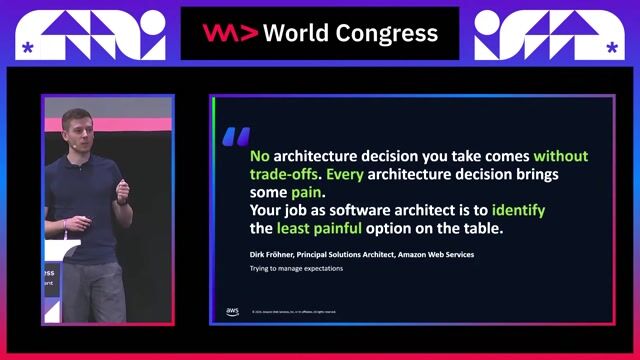
Understanding the trade-offs of using message queues
The Lifehacker's Guide to Software Architecture
04:17 MIN
The hidden complexity of event-driven architectures
Is your backend a hodgepodge of queues, event stores and cron jobs? Durable Execution to the Rescue.
04:11 MIN
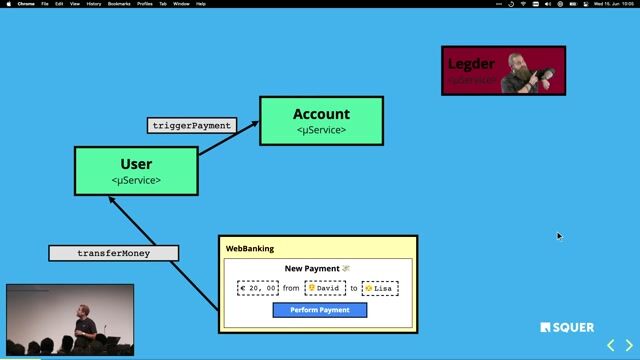
Decoupling services with asynchronous message queues
The Rise of Reactive Microservices
03:38 MIN
Answering audience questions on serverless architecture
From 0 to 1.000.000: How to build a serverless raffle service for hyperscale
04:38 MIN
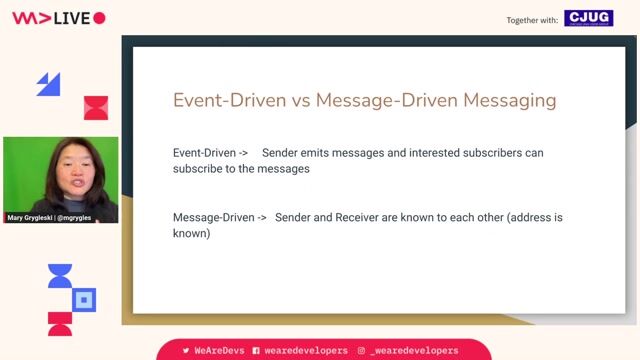
Comparing event-driven and message-driven communication
Event Messaging and Streaming with Apache Pulsar
03:59 MIN
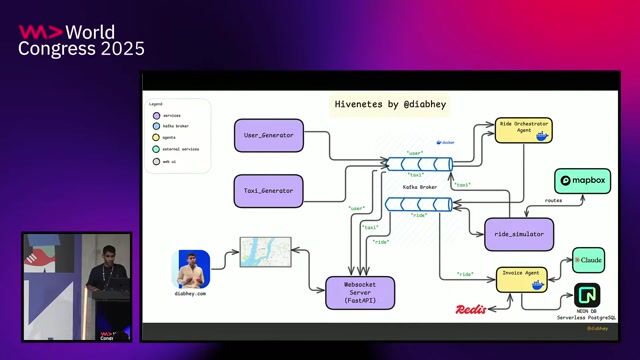
The system design of the event-driven architecture
Event-Driven Architecture: Breaking Conversational Barriers with Distributed AI Agents
22:41 MIN
Answering questions on Kafka use cases, careers, and learning
Let's Get Started With Apache Kafka® for Python Developers
04:23 MIN
A traditional approach to streaming with Kafka and Debezium
Python-Based Data Streaming Pipelines Within Minutes
Why You Shouldn’t Build a Microservice ArchitectureWelcome to this issue of the WeAreDevelopers Live Talk series. This article recaps an interesting talk by Michael Eisenbart who talks about the pros and cons of microservice architecture.About the speaker:Michael has been working for Bosch as a sof...
Gerry Schneider
I have a stream! Why it’s definitely worth speaking at tech conferences.Giving talks at certain events is a longed-for goal for many developers. For a good reason: it is the perfect opportunity to share your expertise and passion for a specific topic, help others learn from your mistakes, drive awareness of your solution...
Chris Heilmann
Dev Digest 134 - Where pixels sing?News and ArticlesWeAreDevelopers LIVE Data and Security Day is on Wednesday, 25/09/2024. Learn about OPC UA Updates, Best Practices for Using GitHub Secrets, Passwordless Web 1.5, Emerging AI Security Risks, Data Privacy in LLMs and get a chance to t...
Chris Heilmann
Dev Digest 121 - AI goes offlineHello fellow developer, let's take a look at the cost of AI and its efficiency, catch up on security issues and sing the praise of new JavaScript and CSS features.News and ArticlesThe way we use AI these days seems powerful, but it isn't very efficie...
From learning to earning
Jobs that call for the skills explored in this talk.







.gif?w=240&auto=compress,format)