Can you build a microservices platform entirely on Kafka Streams? Discover the power and pitfalls of using Kafka as your single source of truth.
#1about 3 minutes
Core concepts of Kafka and Kafka Streams
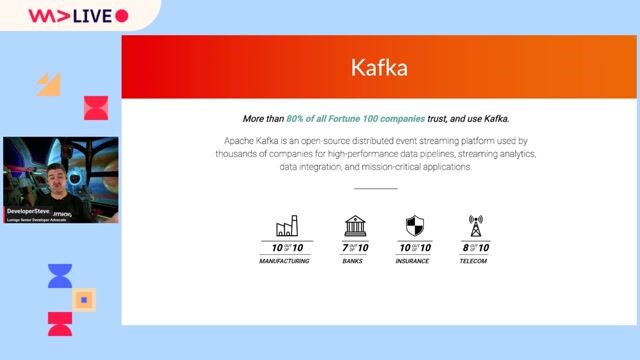
Kafka is a distributed event streaming platform using topics, partitions, producers, and consumers for scalable data processing.
#2about 6 minutes
Evolving from classic microservices to event-driven design
The architecture evolved from traditional request-response microservices to an event-driven model using Kafka as the single source of truth to improve decoupling and extensibility.
#3about 3 minutes
Understanding the system topology and failure scenarios
The system uses an API service with materialized views for robust reads and command processing topologies that can recover from failures by replaying input topics.
#4about 4 minutes
Building a searchable product catalog pipeline
A data pipeline cleans, deduplicates, and amends product data from various sources, then streams it to Elasticsearch to create a searchable materialized view.
#5about 2 minutes
Implementing inventory management using a CQRS pattern
A command processing pipeline implements the CQRS pattern by separating write operations from read models, using an event topic as the source of truth for inventory data.
#6about 7 minutes
Solving uniqueness constraints and race conditions
Race conditions caused by eventual consistency are solved by using manually updated state stores and repartitioning command streams to ensure data locality for validation.
#7about 3 minutes
Opportunistic data consumption for new features
New features like automatic warranty extensions can be added by deploying new services that consume existing data streams without modifying the original producers.
#8about 5 minutes
Key challenges and lessons from a pure Kafka approach
A pure Kafka Streams architecture presents challenges in development complexity, stateful operations, careful configuration for transactions, and operational tooling.
#9about 12 minutes
Evolving the architecture with a hybrid database approach
The architecture can be evolved by integrating traditional databases to simplify complex stateful logic, while using connectors to publish all state changes back to Kafka.
Related jobs
Jobs that call for the skills explored in this talk.
Matching moments
03:41 MIN
Decoupling microservices with event streams
From event streaming to event sourcing 101
01:24 MIN
Understanding Kafka's role in modern architectures
Tips, Techniques, and Common Pitfalls Debugging Kafka
04:23 MIN
A traditional approach to streaming with Kafka and Debezium
Python-Based Data Streaming Pipelines Within Minutes
04:50 MIN
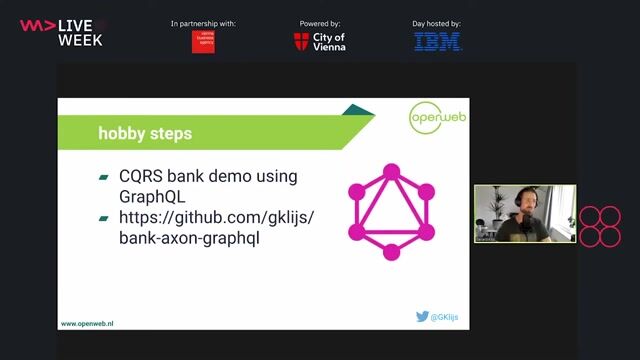
Implementing a CQRS banking demo with Kafka
From event streaming to event sourcing 101
04:11 MIN
Analyzing a complex Kafka architecture at Netflix
Tips, Techniques, and Common Pitfalls Debugging Kafka
02:43 MIN
Implementing an event-driven architecture with Kafka
Application Modernization and Rabbits
01:17 MIN
Recapping Kafka's capabilities for real-time data feeds
Let's Get Started With Apache Kafka® for Python Developers
02:57 MIN
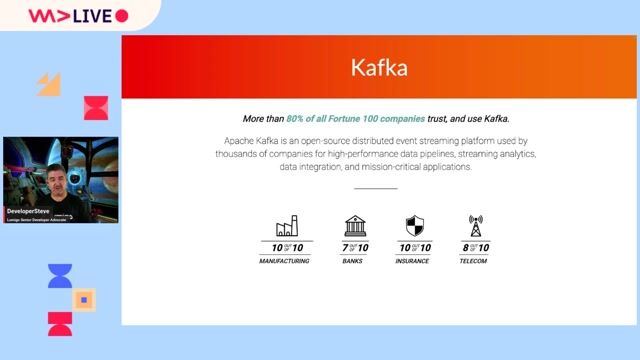
Understanding the purpose and core use cases of Kafka
Let's Get Started With Apache Kafka® for Python Developers
Why You Shouldn’t Build a Microservice ArchitectureWelcome to this issue of the WeAreDevelopers Live Talk series. This article recaps an interesting talk by Michael Eisenbart who talks about the pros and cons of microservice architecture.About the speaker:Michael has been working for Bosch as a sof...
I have a stream! Why it’s definitely worth speaking at tech conferences.Giving talks at certain events is a longed-for goal for many developers. For a good reason: it is the perfect opportunity to share your expertise and passion for a specific topic, help others learn from your mistakes, drive awareness of your solution...








.gif?w=240&auto=compress,format)