Are you done yet? Mastering long-running processes in modern architectures
Are your services pushing transient failures to users? Learn how process orchestration builds resilient systems that recover from errors internally.
#1about 4 minutes
Explaining synchronous and asynchronous communication with metaphors
A pizza ordering metaphor illustrates the difference between synchronous blocking communication like a phone call and asynchronous non-blocking communication like an email.
#2about 7 minutes
Defining long-running processes and business reasons for waiting
Long-running processes are defined by periods of waiting, driven by business needs like human tasks, response delays, or mitigating buyer's remorse.
#3about 4 minutes
The hidden complexity of building stateful applications
Implementing stateful, long-running logic with simple database columns leads to accidental complexity around visibility, escalations, versioning, and reliability.
#4about 10 minutes
A live demo of a workflow engine with spring boot
A practical demonstration shows how to use a workflow engine like Camunda with Spring Boot to model, execute, and monitor a customer onboarding process.
#5about 9 minutes
Using long-running patterns to build resilient systems
Failures in distributed systems, such as an unavailable service during an airline check-in, necessitate long-running retry patterns to create a resilient architecture.
#6about 6 minutes
Implementing safe retries with idempotency and compensation
Safely retrying operations in a distributed system requires idempotent APIs to prevent duplicate actions and compensation logic to clean up after ultimate failures.
#7about 6 minutes
Designing clean service boundaries with orchestration
Empowering individual services to handle their own long-running logic, like payment retries, leads to cleaner service boundaries and avoids creating monolithic god services.
#8about 4 minutes
Why graphical models are powerful tools for developers
Graphical models like BPMN serve as living documentation, facilitate communication between business and technical teams, and provide crucial operational visibility.
#9about 9 minutes
Q&A on Camunda, implementation trade-offs, and scale
The speaker answers audience questions about Camunda's open-source model, the trade-offs of adopting a workflow engine, and how the technology scales.
Related jobs
Jobs that call for the skills explored in this talk.
Matching moments
03:48 MIN
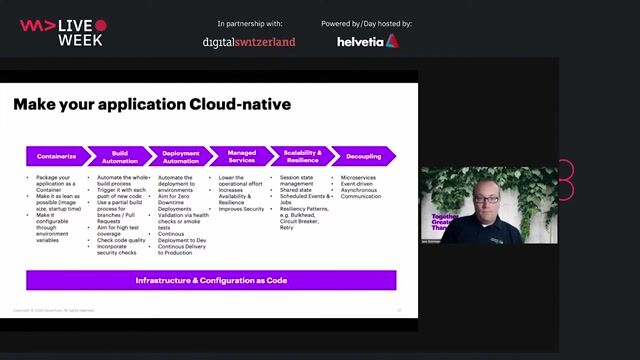
Implementing advanced patterns for resilience and decoupling
Cloud-nativeApplications- What’s the buzz about
03:08 MIN
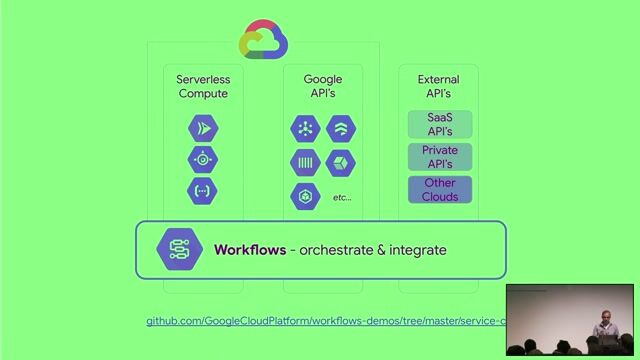
Combining patterns for advanced serverless architectures
Serverless landscape beyond functions
01:54 MIN
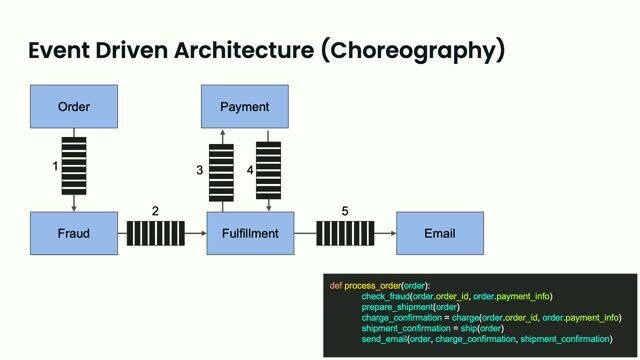
Why traditional orchestration engines often fail developers
Is your backend a hodgepodge of queues, event stores and cron jobs? Durable Execution to the Rescue.
04:56 MIN
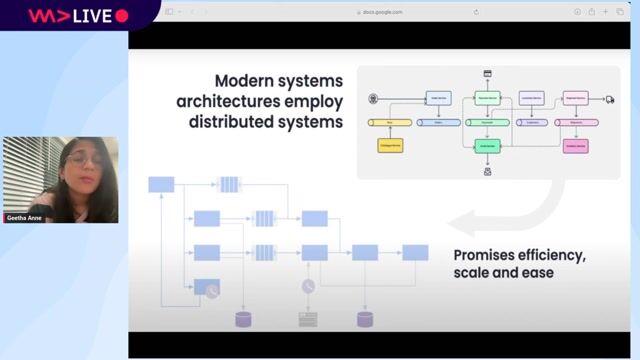
The challenge of managing modern distributed systems
Exploring Durable Execution with Python
07:31 MIN
Lessons from a hybrid reactive and blocking architecture
Going reactive with Spring WebFlux
05:04 MIN
Navigating the challenges of modern software development
System Resilience: Surviving the Software Storm
05:29 MIN
Building efficient services for legacy system environments
Slip Through the Boundaries of Legacy Systems with Kotlin and Spring WebFlux
02:48 MIN
Building modular workflows with decoupled processes
Transforming Task Management: Integrating Camunda with Scalable Frontend Solutions
Processing 175 WeAreDeveloper World Congress talk videos in 5 hours - with PHP?Every year after the WeAreDevelopers World Congress is over, we have a ton of video footage to edit and release. Most of it is in raw format and needs editing by hand, but a lot of our sessions are also streamed live on YouTube and thus easier to re-...
Chris Heilmann
WWC24 Talk - Brenda Romero - Stay: Surviving and Thriving in TechBrenda Romero discusses her tech career journey, overcoming burnout, and inspiring future game developers at WWC24.Here is what she had to say in the video:Hey everyone! Thanks for joining us!Reflections on a Rough YearLast year, I gave a talk about ...
Benedikt Bischof
Why You Shouldn’t Build a Microservice ArchitectureWelcome to this issue of the WeAreDevelopers Live Talk series. This article recaps an interesting talk by Michael Eisenbart who talks about the pros and cons of microservice architecture.About the speaker:Michael has been working for Bosch as a sof...
Benedikt Bischof
How we Build The Software of TomorrowWelcome to this issue of the WeAreDevelopers Live Talk series. This article recaps an interesting talk by Thomas Dohmke who introduced us to the future of AI – coding.This is how Thomas describes himself:I am the CEO of GitHub and drive the company’s...
From learning to earning
Jobs that call for the skills explored in this talk.





.gif?w=240&auto=compress,format)