There is no such thing as future-proof architecture! Here is how to prepare for it.
What if the pursuit of a 'future-proof' architecture is a trap? Learn why the most resilient systems aren't built to last, but designed to evolve.
#1about 2 minutes
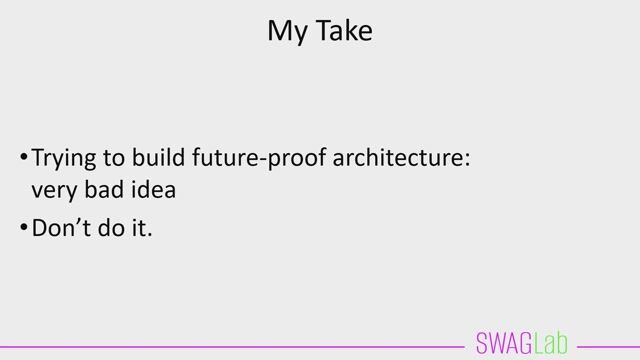
The myth of future-proof software architecture
The common belief that architecture should be future-proof is a flawed conclusion drawn from the fact that architectural decisions are hard to change.
#2about 3 minutes
A case study of a failed migration project
A real-world project failed because the team discovered their initial migration plan was flawed only after the project began, highlighting the danger of rigid upfront plans.
#3about 3 minutes
Why architecture must evolve iteratively
Architecture must be iterative because domain models evolve, requirements change, and developers continuously learn and improve their skills.
#4about 3 minutes
Starting projects with domain prototyping
Instead of over-planning, start with domain prototyping to focus on business logic first and defer technology decisions to the last responsible moment.
#5about 6 minutes
Moving beyond YAGNI with a goal-oriented approach
While YAGNI was a useful counter to big upfront design, a better approach is to navigate immediate requirements while always keeping the long-term project goal in view.
#6about 5 minutes
The danger of a future-proof mindset
Aiming for a future-proof architecture creates a reluctance to make necessary changes, leading to a messy system as new features are forced into an outdated structure.
#7about 4 minutes
Letting the business domain drive the design
Effective architecture is not about abstract technical diagrams but about creating a structure that clearly reflects the business domain and its processes.
#8about 3 minutes
A pragmatic view on technology choices
Preparing for technology changes by creating technology-independent code is often unnecessary, as major technology shifts usually coincide with required changes to the business logic.
#9about 2 minutes
Conclusion: Embrace change and focus on the domain
The key to long-term project success is not a future-proof plan but an adaptable architecture that is driven by the domain and accepts the limited lifespan of technologies.
Related jobs
Jobs that call for the skills explored in this talk.
Matching moments
02:20 MIN
The role of an architect and the need for architecture
Architectures that we can use with .NET
03:57 MIN
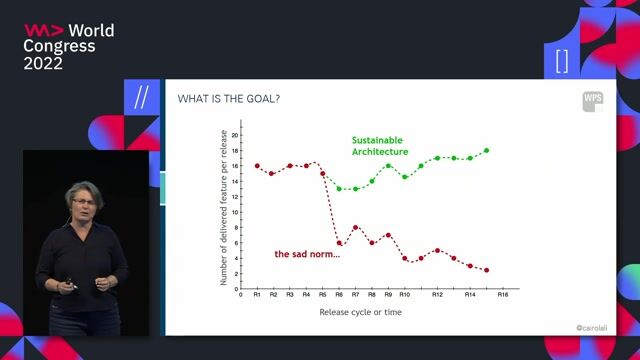
Achieving sustainable software architecture for long-term productivity
It’s all about the domain, honey ! Experiences from 15 years of Domain-Driven Design
02:32 MIN
Software architecture is about evaluating consequences
Micro Frontends with Module Federation: Why and How?
04:59 MIN
Defining software architecture as the important, hard-to-change decisions
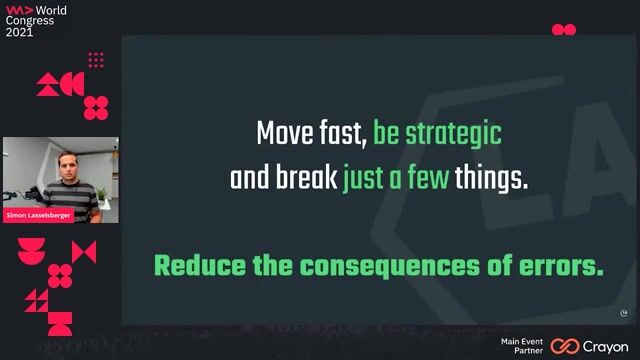
Move fast with Software Architecture
02:43 MIN
Avoiding tech debt with careful architectural decisions
10 commandments for vibe coding
04:20 MIN
Introduction to Domain-Driven Design and sustainability
It’s all about the domain, honey ! Experiences from 15 years of Domain-Driven Design
01:17 MIN
Why domain models create resilient and adaptable software
How to Domain Model – An example from manufacturing
03:08 MIN
Building software architectures that can evolve over time
Fireside Chat with Werner Vogels, VP & CTO, Amazon.com & Daniel Gebler, CTO at Picnic
Why You Shouldn’t Build a Microservice ArchitectureWelcome to this issue of the WeAreDevelopers Live Talk series. This article recaps an interesting talk by Michael Eisenbart who talks about the pros and cons of microservice architecture.About the speaker:Michael has been working for Bosch as a sof...
Benedikt Bischof
How we Build The Software of TomorrowWelcome to this issue of the WeAreDevelopers Live Talk series. This article recaps an interesting talk by Thomas Dohmke who introduced us to the future of AI – coding.This is how Thomas describes himself:I am the CEO of GitHub and drive the company’s...
A Guide to Public Speaking For Software Engineers“Your technical skills are where they need to be, but you need to improve your communication.” - Your manager. This is one of the hardest pieces of feedback to hear as a software engineer. Why? Because you probably thought as a software engineer you ...
From learning to earning
Jobs that call for the skills explored in this talk.




.gif?w=240&auto=compress,format)


.png?w=240&auto=compress,format)