Every development team creates an architecture. The only choice is whether it's planned or unplanned—and the consequences are massive.
#1about 4 minutes
Bridging the communication gap between stakeholders
Software's unique properties like invisibility and changeability create a communication gap between internal technical teams and external business stakeholders.
#2about 3 minutes
Understanding the core cycle of an architect's work
An architect's role involves a continuous cycle of gathering requirements, designing solutions, evaluating them, and verifying the final implementation.
#3about 3 minutes
Using ISO 25010 to define non-functional requirements
The ISO 25010 standard provides a framework for defining crucial non-functional requirements that guide architectural decisions like choosing a monolith for performance.
#4about 4 minutes
Recognizing the root causes of technical debt
Unplanned architecture leads to technical debt, which is often a symptom of deeper issues like missing requirements and a lack of documentation.
#5about 4 minutes
Navigating the complete software evolution lifecycle
Software evolves through phases from initial development and feature addition to servicing and eventual phase-out, with early decisions impacting its entire lifespan.
#6about 2 minutes
Differentiating between refactoring and restructuring legacy code
Small, safe changes are refactoring, while large-scale changes like cloud migration are restructuring projects that require significant planning and investment.
#7about 3 minutes
Understanding the multiple layers of enterprise architecture
Architecture extends beyond code to include layers like business, application, data, and technology, which together form the enterprise architecture.
#8about 2 minutes
Defining the architect as a strategic leadership role
The architect provides strategic oversight, ensuring the team stays on track by combining skills from development, testing, and product ownership.
Related jobs
Jobs that call for the skills explored in this talk.
Matching moments
02:20 MIN
The role of an architect and the need for architecture
Architectures that we can use with .NET
01:34 MIN
The myth of future-proof software architecture
There is no such thing as future-proof architecture! Here is how to prepare for it.
04:59 MIN
Defining software architecture as the important, hard-to-change decisions
Move fast with Software Architecture
02:32 MIN
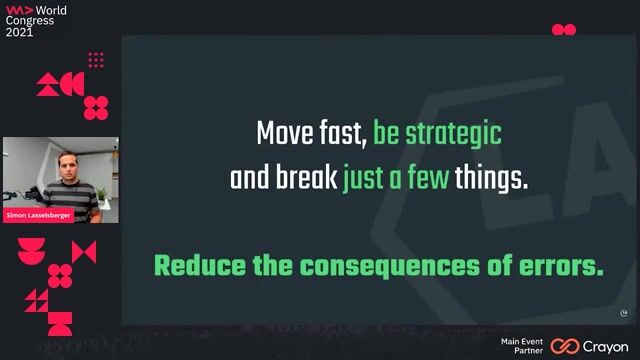
Software architecture is about evaluating consequences
Micro Frontends with Module Federation: Why and How?
03:57 MIN
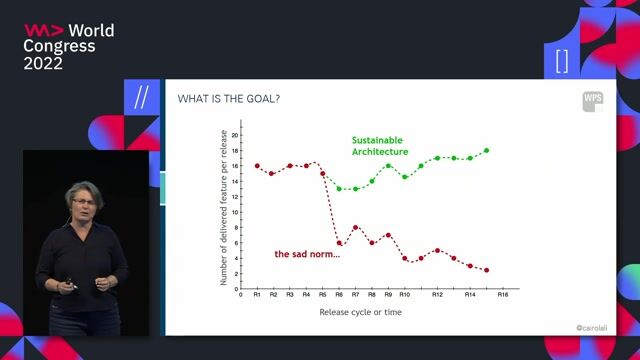
Achieving sustainable software architecture for long-term productivity
It’s all about the domain, honey ! Experiences from 15 years of Domain-Driven Design
04:25 MIN
Why a software architect is more like a town planner
Move fast with Software Architecture
02:07 MIN
Aligning architecture with non-functional requirements
Why (most) software projects fail silently...
03:15 MIN
Q&A: Advocating for architecture on understaffed teams
Why You Shouldn’t Build a Microservice ArchitectureWelcome to this issue of the WeAreDevelopers Live Talk series. This article recaps an interesting talk by Michael Eisenbart who talks about the pros and cons of microservice architecture.About the speaker:Michael has been working for Bosch as a sof...
Jordan Cutler
A Guide to Public Speaking For Software Engineers“Your technical skills are where they need to be, but you need to improve your communication.” - Your manager. This is one of the hardest pieces of feedback to hear as a software engineer. Why? Because you probably thought as a software engineer you ...
Chris Heilmann
Transforming Software Development: The Role of AI and Developer ToolsIn today's fast-paced tech landscape, AI has begun to play an increasingly significant role, reshaping the way developers create software. As we delve into this transformation, we uncover both opportunities and challenges that AI brings into the worl...








.gif?w=240&auto=compress,format)
.png?w=240&auto=compress,format)