Effective Java Strategies and Architectures for Clouds
Are your microservices actually costing more than a monolith? It’s time to rethink common cloud fallacies and adopt a truly cost-driven architecture for your Java applications.
#1about 2 minutes
Defining what 'effective' means for a cloud strategy
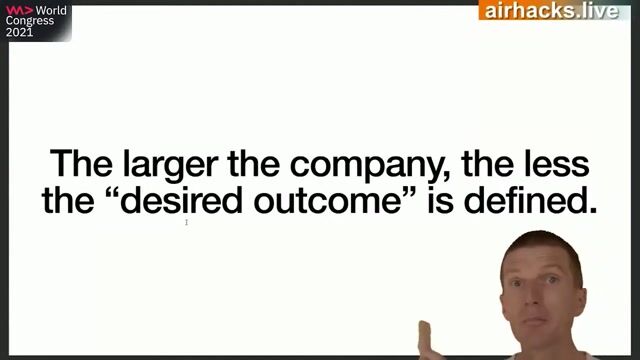
An effective cloud strategy requires a clearly defined desired outcome, which is often missing in large enterprises that migrate without a clear purpose.
#2about 6 minutes
Parallels between old Java EE and modern cloud configuration
The evolution from excessive XML in early Java EE to YAML and JSON in modern cloud tools shows a recurring pattern of complex, verbose configuration.
#3about 7 minutes
Debunking common myths and expectations of public clouds
Many common expectations for public clouds, such as automatic scalability, low cost, and ease of use, are often fallacies for typical enterprise applications.
#4about 2 minutes
Understanding Kubernetes as a foundational platform
Kubernetes should be viewed as a platform for building other platforms, similar to an operating system, rather than a direct application endpoint.
#5about 6 minutes
Abstracting Kubernetes with a managed application server
Services like Payara Cloud act as a cloud orchestrator, managing Kubernetes behind the scenes to simplify deployment to just uploading a WAR file.
#6about 6 minutes
Why cloud costs are driving a return to monoliths
The "lift and shift" approach provides little value, and the per-resource cost model of clouds makes microservice overhead expensive, favoring monoliths for efficiency.
#7about 6 minutes
How cloud billing models influence software architecture
Cloud's pay-per-use model forces developers to make architectural choices based on monthly costs, impacting everything from API calls to storage selection.
#8about 3 minutes
Building an effective strategy around serverless and automation
A practical cloud strategy involves automating deployments, keeping simple applications on-premise, and embracing serverless for its scalability and pay-per-use model.
#9about 2 minutes
Leveraging high-value managed services as the killer app
The primary value of the cloud comes from specialized managed services like AI/ML, text extraction, and global CDNs that provide significant business value.
Related jobs
Jobs that call for the skills explored in this talk.
Matching moments
07:05 MIN
Java's adaptation for cloud-native and serverless computing
Build ultra-fast In-Memory Database Apps and Microservices with Java
06:24 MIN
Adapting infrastructure practices for the cloud environment
Cloud Chaos and Microservices Mayhem
10:47 MIN
Q&A on green cloud providers and implementation strategies
Green Cloud Computing
05:01 MIN
How cloud architecture evolved from monoliths to microservices
Build ultra-fast In-Memory Database Apps and Microservices with Java
01:15 MIN
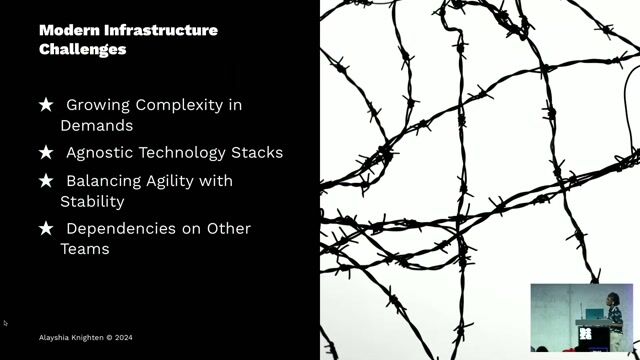
Understanding modern cloud infrastructure challenges
Unleashing Potential Across Teams: The Power of Infrastructure as Code
02:46 MIN
Understanding critical architectural trade-offs and anti-patterns
Azure-Well Architected Framework - designing mission critical workloads in practice
04:17 MIN
Understanding the evolution of cloud compute models
Fun with PaaS – How to use Cloud Foundry and its uniqueness in creative ways
25:09 MIN
Audience Q&A on serverless IoT development
Building your way to a serverless powered IOT Buzzwire game
7 Cloud Computing Trends Coming in 2025 for DevelopersThe demand for cloud processing power is not slowing down. With SaaS spending projected to grow—for a second year in a row—by 17% in 2024, the cloud sector will keep growing and is likely to offer plenty of job opportunities for software engineers. A...
All the videos of Halfstack London 2024!Last month was Halfstack London, a conference about the web, JavaScript and half a dozen other things. We were there to deliver a talk, but also to record all the sessions and we're happy to share them with you. It took a bit as we had to wait for th...
From learning to earning
Jobs that call for the skills explored in this talk.








.webp?w=240&auto=compress,format)