Serverless Java in Action: Cloud Agnostic Design Patterns and Tips
What if your serverless Java app could scale from zero to 45 pods in seconds? Discover the cloud-agnostic patterns that make it possible.
#1about 2 minutes
The business case for serverless computing
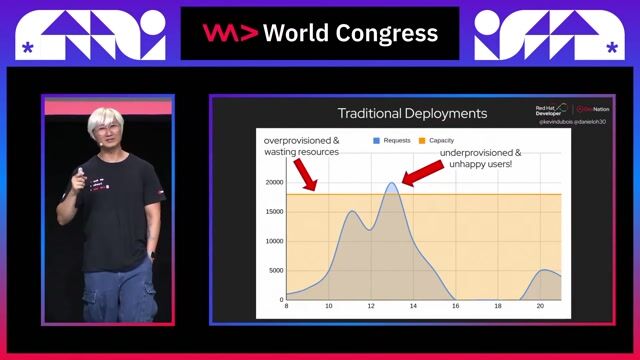
Serverless computing addresses the challenge of matching resources to fluctuating application workloads, which saves money and improves reliability.
#2about 1 minute
Why traditional Java was too slow for serverless
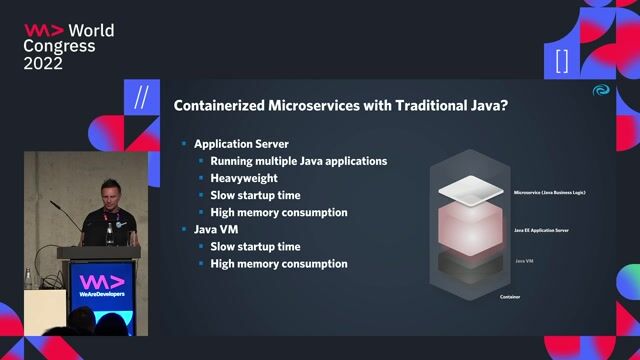
Java's historically long startup and warmup times made it a poor fit for serverless functions compared to lighter languages like JavaScript or Go.
#3about 2 minutes
Using Quarkus and GraalVM for fast Java startup
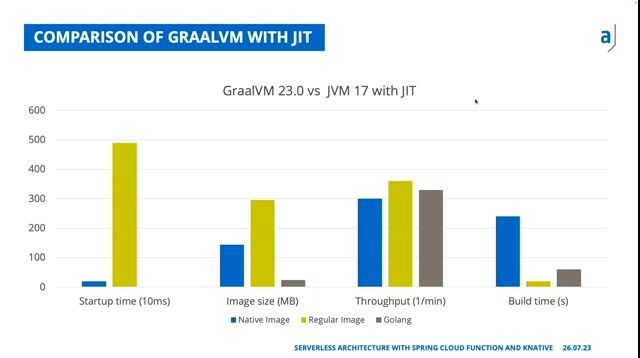
Modern cloud-native frameworks like Quarkus use native compilation with GraalVM to achieve sub-second startup times and a small memory footprint.
#4about 4 minutes
Writing cloud-agnostic functions to avoid vendor lock-in
Using abstractions like Quarkus Funqy allows developers to write a single serverless function that can be deployed to AWS Lambda or Azure Functions without code changes.
#5about 2 minutes
The hidden vendor lock-in of serverless container platforms
Even when using portable containers, proprietary cloud services for gateways and eventing can still lock your architecture into a single provider.
#6about 4 minutes
Building a portable serverless platform with Knative
Knative extends Kubernetes to provide open-source, cloud-agnostic serverless capabilities, including auto-scaling and eventing with standards like CloudEvents.
#7about 8 minutes
Live demo of an auto-scaling event-driven application
A live demonstration shows a Quarkus application on Knative scaling from zero to over 45 pods in seconds to handle a request burst.
#8about 3 minutes
Key takeaways for building portable serverless Java applications
The main benefit of this approach is the ability to redeploy a serverless application to a different cloud provider in minutes without any code changes.
Related jobs
Jobs that call for the skills explored in this talk.
Matching moments
02:21 MIN
Solving Java's serverless challenges with Quarkus
Serverless-Native Java with Quarkus
07:05 MIN
Java's adaptation for cloud-native and serverless computing
Build ultra-fast In-Memory Database Apps and Microservices with Java
04:59 MIN
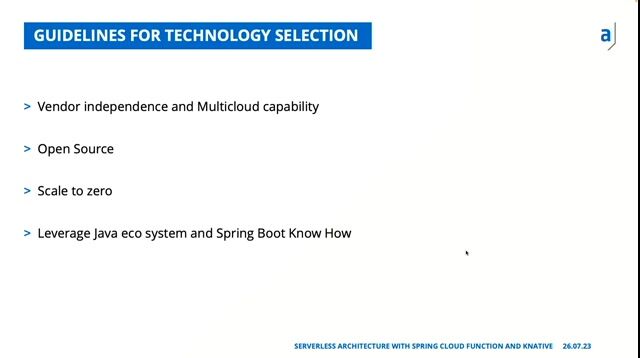
Choosing a technology stack for serverless Java applications
Serverless Architectures with Spring Cloud Functions and Knative
03:11 MIN
Optimizing Java performance for cloud-native applications
Cloud Chaos and Microservices Mayhem
02:21 MIN
The evolution from traditional Java EE to modern runtimes
2021: Familiar APIs on Kickass Runtimes #slideless
05:17 MIN
Introduction to the cloud-native security workshop
Get started with securing your cloud-native Java microservices applications
03:42 MIN
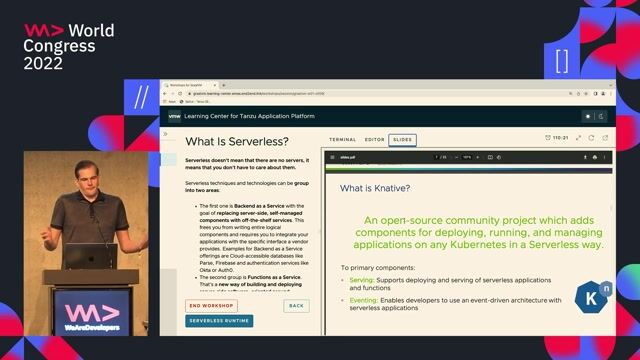
Introducing Knative as a serverless runtime for Kubernetes
Going serverless using the Spring Framework ecosystem
04:31 MIN
Exploring alternatives and ideal use cases for FaaS
Serverless Architectures with Spring Cloud Functions and Knative
7 Cloud Computing Trends Coming in 2025 for DevelopersThe demand for cloud processing power is not slowing down. With SaaS spending projected to grow—for a second year in a row—by 17% in 2024, the cloud sector will keep growing and is likely to offer plenty of job opportunities for software engineers. A...
Chris Heilmann
All the videos of Halfstack London 2024!Last month was Halfstack London, a conference about the web, JavaScript and half a dozen other things. We were there to deliver a talk, but also to record all the sessions and we're happy to share them with you. It took a bit as we had to wait for th...
Benedikt Bischof
Using Java 17 latest features in real world projectsWelcome to this issue of the WeAreDevelopers Live Talk series. This article recaps an interesting talk by Ron Veen who introduced the audience to some of the most interesting features that got added to the Java language.About the speaker:Ron is a hig...
From learning to earning
Jobs that call for the skills explored in this talk.



.webp?w=240&auto=compress,format)

.gif?w=240&auto=compress,format)