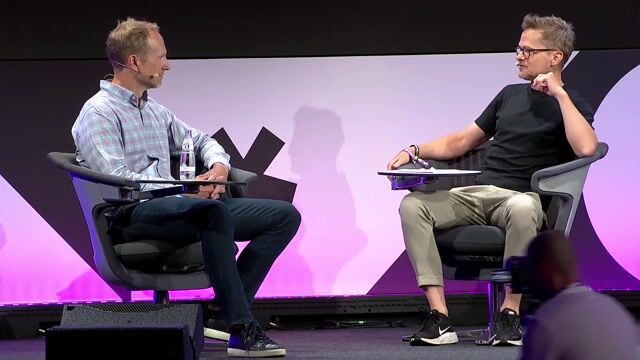
Figma's CTO believes AI won't replace designers. Instead, it will accelerate creativity so dramatically that it will lead to entirely new kinds of products.
#1about 3 minutes
Kris Rasmussen's journey to Figma before its launch
The CTO recounts joining Figma in 2016 and the early vision to build a collaborative, web-based design tool for entire product teams.
#2about 3 minutes
Overcoming the technical challenges of a web-based tool
Figma initially hedged its bets with C++ and a native app before going all-in on web technologies like ASM.js to achieve high performance in the browser.
#3about 2 minutes
Evolving design abstractions for modern frontend development
Figma introduced new concepts like constraints and dynamic layouts to bridge the gap between static design and the needs of responsive, component-based web development.
#4about 2 minutes
Bridging the gap between designers and developers
Realizing that two-thirds of users were non-designers, Figma created dedicated modes and views to improve the design-to-development handoff process.
#5about 3 minutes
Balancing direct manipulation with code abstraction
The design process requires direct manipulation for early exploration, while coding requires abstraction, and Figma aims to expedite the translation between these two phases.
#6about 3 minutes
Managing feedback with exploration and execution phases
To manage collaborative input, Figma's internal process separates projects into an exploration phase for brainstorming and an execution phase focused on hitting milestones.
#7about 2 minutes
Measuring progress through artifacts instead of tasks
Focusing on tangible outputs like prototypes and demos creates a stronger sense of momentum and progress than simply tracking tasks in project management software.
#8about 3 minutes
Figma's strategy for integrating AI features
AI is used to automate tedious work like connecting prototypes, semantically renaming layers, and generating first drafts from prompts using the "Make Designs" feature.
#9about 6 minutes
The future of professional craft in the age of AI
AI is positioned as a tool to augment professional skills and expedite workflows, enabling creators to stand out rather than replacing their craftsmanship.
#10about 2 minutes
How small improvements will drive future innovation
The principle "differences in degree yield differences in kind" suggests that AI-driven speed boosts will enable faster iteration and unlock entirely new creative possibilities.
#11about 2 minutes
Creative and unexpected community uses of Figma
The platform's real-time, graphical nature has led to emergent uses like creating a temporary chat app during a Slack outage or designing floor plans.
Related jobs
Jobs that call for the skills explored in this talk.
Matching moments
03:33 MIN
Figma's evolution into a product development platform
Designing the Future of Human<>Agent Collaboration
03:50 MIN
Improving design tooling and engineering handoff
Shift Left On Accessibility - Geri Reid
02:51 MIN
Addressing the accessibility gap in modern design tools
AI and Accessibility: The Good and the Bad - Fireside Chat
01:08 MIN
Using Figma to design and standardize UI components
Bridging the Gap
05:19 MIN
Using AI for rapid ideation with Figma Make
Designing the Future of Human<>Agent Collaboration
03:31 MIN
Automating frontend development from Figma designs
The Alpha‑Developer of Tomorrow: Building the Future of the Software Development Lifecycle
12:29 MIN
Q&A on WordPress, tool selection, and collaboration
How to Build Truly Production-ready Apps - Modern JS-based SaaS Stack for Indie Devs and Small Teams
03:26 MIN
Bridging the gap between designers and developers
WeAreDevelopers LIVE - Is Software Ever Truly Accessible?
10 Essential Figma Plugins for Frontend Developers in 2023In 2023, tools for frontend developers drop by the minute, and Figma might be the most visually appealing. The cloud-based UX and UI design tool that simplifies almost any design process recently scored a scanty 20-billion-dollar sale, and it was par...
Tammy Wood
The future is here: How artificial intelligence is influencing UX designAI has become deeply integrated into every aspect of our lives in recent years - from disease mapping to web design basics. And, generally, we have benefitted hugely from this development. AI is expanding its reach to every industry and sector; it’s ...
Daniel Cranney
Panel Discussion: Responsible AI in Practice - Real-World Examples and ChallengesIntroductionIn the ever-evolving landscape of artificial intelligence, the concept of "responsible AI" has emerged as a cornerstone for ethical and practical AI implementation. During the WWC24 Panel discussion, three eminent experts—Mina, Bjorn Brin...
Daniel Cranney
Stephan Gillich - Bringing AI EverywhereIn the ever-evolving world of technology, AI continues to be the frontier for innovation and transformation. Stephan Gillich, from the AI Center of Excellence at Intel, dove into the subject in a recent session titled "Bringing AI Everywhere," sheddi...
From learning to earning
Jobs that call for the skills explored in this talk.





.png?w=240&auto=compress,format)