Trying to fix all your tech debt at once is like mopping while the faucet is running. This talk shows you how to turn off the water.
#1about 2 minutes
Understanding code as the foundational asset of software
Software is built on code, which acts like the roots of a tree, dictating its behavior, performance, and long-term health.
#2about 4 minutes
Exploring the four essential pillars of clean code
Clean code is defined by four key attributes: consistency for team collaboration, intentionality to avoid bugs, adaptability for future changes, and responsibility to prevent bad practices.
#3about 3 minutes
How clean code increases development velocity and ownership
Unclean code leads to rework and disposable code, while clean code increases team throughput, enables innovation, and fosters a sense of ownership.
#4about 3 minutes
Why knowing your code quality metrics is not enough
Simply measuring code quality metrics like code coverage often fails to drive improvement because it focuses on the entire existing codebase, which is an overwhelming problem to solve.
#5about 5 minutes
Adopting the "Clean as You Code" methodology
The "Clean as You Code" approach fixes the "water leak" by focusing on ensuring that all new and changed code meets a high-quality standard via a quality gate.
#6about 1 minute
How "Clean as You Code" organically improves legacy code
By focusing on new and modified code, this methodology naturally cleans up the legacy codebase over time as developers touch about 20% of the code annually.
#7about 2 minutes
Integrating code quality checks into the development lifecycle
The "Clean as You Code" practice is integrated throughout the development process, starting in the IDE and continuing through pull requests and CI/CD pipelines.
#8about 2 minutes
A summary of the clean code imperative
The presentation concludes that clean code creates a better work environment and that the "Clean as You Code" approach is the simplest way to achieve it without adding extra steps.
#9about 7 minutes
Q&A on Sonar, AI in code analysis, and pricing
The Q&A session addresses questions about architectural concepts like DDD, the use of AI in analysis, Sonar's pricing model, and strategies for shifting quality checks earlier in the development cycle.
Related jobs
Jobs that call for the skills explored in this talk.
Matching moments
02:11 MIN
Building a sustainable culture of clean code
Breaking the Bug Cycle: TDD for the Win
06:16 MIN
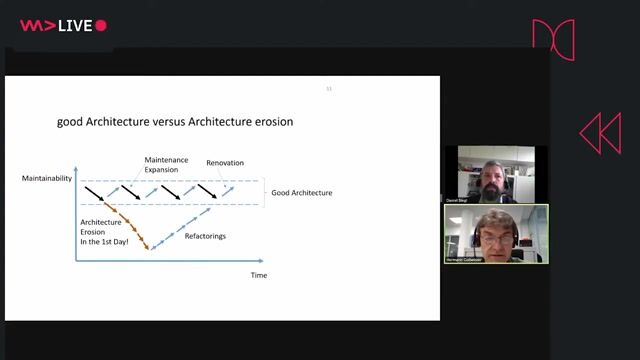
Why code-centric development becomes fragile and hard to maintain
The Power of Prompting with AI Native Development - Simon Maple
02:23 MIN
Key strategies for building a secure code culture
Secure Code Superstars: Empowering Developers and Surpassing Security Challenges Together
01:42 MIN
Moving beyond the dogma of clean code
Intentional Code - Minimalism in a World of Dogmatic Design
01:57 MIN
How AI makes managing technical debt an organizational necessity
Your Code as a Crime Scene
02:29 MIN
Three core challenges in modern software development
Kalo: From Code Chaos to One-Click Polyglot Codegen
02:34 MIN
Addressing the challenge of growing software complexity
Model Based Systems Engineering in an Agile Product Development Process
03:57 MIN
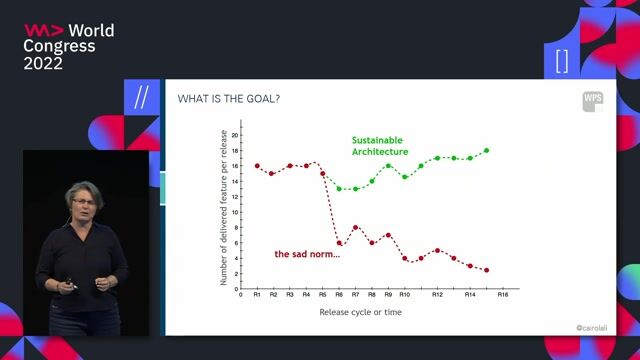
Achieving sustainable software architecture for long-term productivity
It’s all about the domain, honey ! Experiences from 15 years of Domain-Driven Design
How we Build The Software of TomorrowWelcome to this issue of the WeAreDevelopers Live Talk series. This article recaps an interesting talk by Thomas Dohmke who introduced us to the future of AI – coding.This is how Thomas describes himself:I am the CEO of GitHub and drive the company’s...
Daniel Cranney
The real reason we document our codeThe world of software development moves fast. Technology is constantly changing, as are the tools we use with it, and even the role of a programmer is itself constantly in flux. However, some aspects of software engineering are so foundational that w...