Is your team trapped by the 'it works' mindset? Break the cycle of technical debt by building a codebase that inspires confidence, not fear.
#1about 2 minutes
Defining refactoring and refactorable code
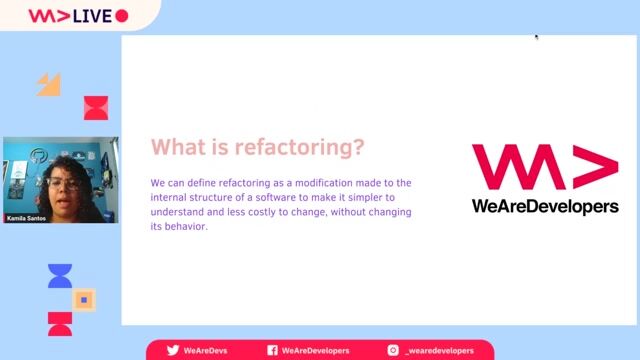
Refactoring improves internal code structure without changing external behavior, while refactorable code provides a safe environment for both improvement and extension.
#2about 4 minutes
Understanding the development cycle and its negative impacts
The development cycle of reading, concluding, and adjusting code can be slowed by negative forces like pressure, ignorance, and fear, leading to decreased quality.
#3about 2 minutes
Building confidence as the driver for better code
Confidence in reading, understanding, and adjusting code is the positive force that counteracts pressure and fear, enabling a sustainable development pace.
#4about 6 minutes
Writing readable code through clear naming and structure
Improve code readability by using expressive names, separating concerns to reduce complexity, and avoiding the 'it works' mindset that accumulates technical debt.
#5about 4 minutes
Making implicit knowledge explicit with tests and commits
Share domain knowledge and technical context effectively through self-documenting unit tests and detailed, explanatory commit messages.
#6about 5 minutes
Using TDD and small steps for safer adjustments
Adopt test-driven development (TDD) as a design technique and make small, incremental changes with version control checkpoints to adjust code safely.
#7about 2 minutes
The business value of building sustainable software
Investing in refactorable code is not just about developer convenience; it's a financial decision to prevent costly rewrites and build competitive, long-lasting products.
#8about 2 minutes
Q&A: Handling cross-team refactoring and urgent features
Discussion on how to convince other teams to refactor using tests for safety, when not to refactor, and how to balance refactoring with urgent feature requests.
Related jobs
Jobs that call for the skills explored in this talk.
Matching moments
02:11 MIN
Building a sustainable culture of clean code
Breaking the Bug Cycle: TDD for the Win
03:11 MIN
Why refactoring is the right frame for sustainability
The Environmental Impact of Software Development
06:16 MIN
Why code-centric development becomes fragile and hard to maintain
The Power of Prompting with AI Native Development - Simon Maple
02:01 MIN
What is refactoring and why is it important
I will have to refactor ! And now ? Refactoring Techniques in Java
01:41 MIN
Why good tests enable confident refactoring and speed
TDD for Vue.js Developers
01:18 MIN
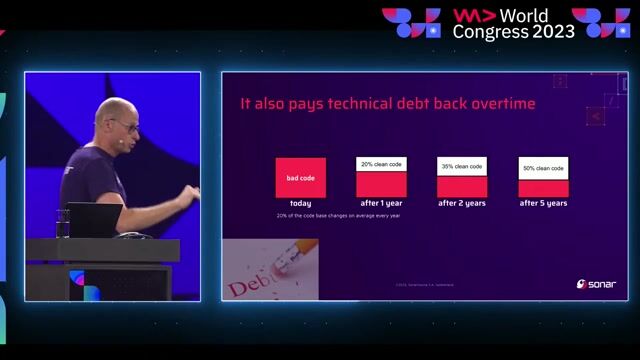
How "Clean as You Code" organically improves legacy code
The Clean as You Code Imperative
03:33 MIN
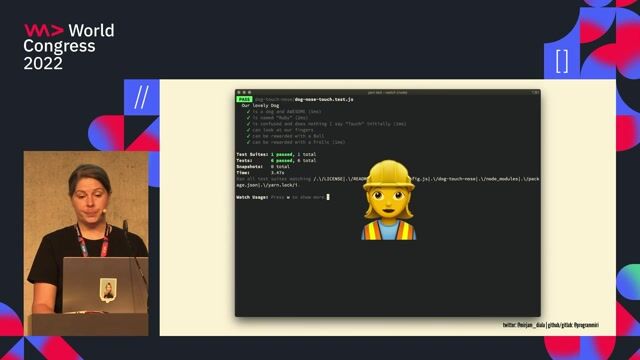
Refactoring implementation and test code with confidence
Treat yourself - A tale about dog training and test-driven development
03:07 MIN
How clean code increases development velocity and ownership
The real reason we document our codeThe world of software development moves fast. Technology is constantly changing, as are the tools we use with it, and even the role of a programmer is itself constantly in flux. However, some aspects of software engineering are so foundational that w...
Get Old, go Slow, Write Code!Welcome to the newest series of the WeAreDevelopers Magazine – Dev Talk Recap. This article recaps an interesting talk by Tobias Modig who gave advice about getting old(er) as a developer and slowing down. What you will learn:Thoughts of the speaker ...
Daniel Cranney
One billion (bad?) developers: How AI is changing the way we learn to codeAI has transformed so many aspects of programming, with IDE-integrated code assistants now capable of building complex projects from simple prompts.While AI makes it easier for newcomers to dive into coding, could it also hinder their learning by enc...
From learning to earning
Jobs that call for the skills explored in this talk.





.gif?w=240&auto=compress,format)