How can an app stay 93% online even when the backend fails? Discover the power of reactive architectures and GraphQL subscriptions.
#1about 4 minutes
Defining reactivity and asynchronous data streams
Reactivity is defined as programming with asynchronous data streams, which are data containers that exist in plural space and asynchronous time.
#2about 8 minutes
Exploring the core principles of reactive programming
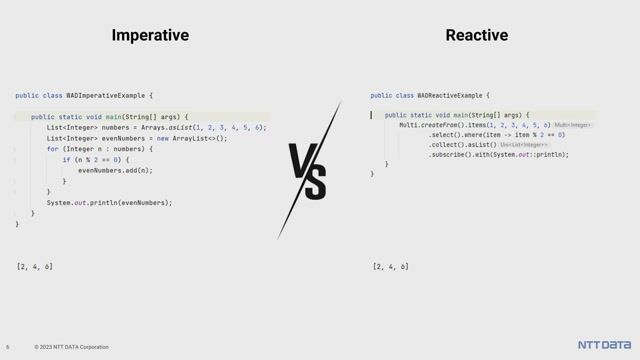
Reactive programming makes the relationship between variables explicit using streams, shifting from a pull-based design to a push-based design for automatic updates.
#3about 8 minutes
Applying reactive principles to system architecture
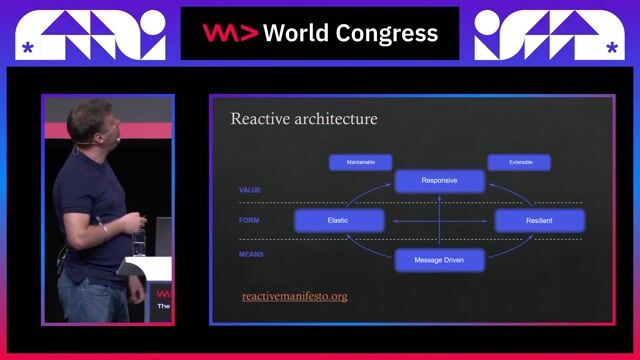
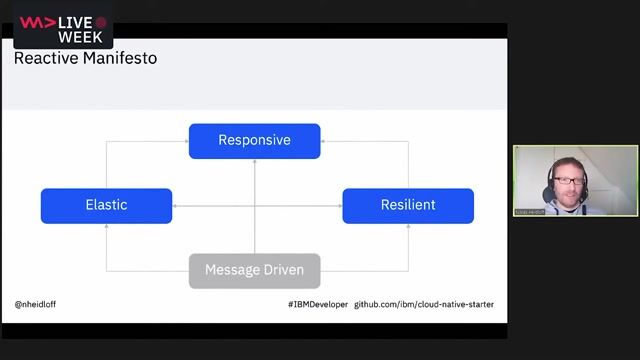
The Reactive Manifesto guides building responsive systems by achieving elasticity and resilience through a message-driven architecture that supports back pressure and location transparency.
#4about 7 minutes
Tracing the evolution of microservices toward reactivity
Microservice architectures evolved from synchronous pull-based models to fully asynchronous, stream-centric systems using event sourcing and functions-as-a-service.
#5about 2 minutes
Using GraphQL subscriptions for end-to-end streaming
GraphQL subscriptions provide the missing piece for end-to-end reactivity by enabling push-based data streaming from the server to the client.
#6about 4 minutes
Building a collaborative real-time insurance portal
A reactive architecture enables real-time synchronization between an insurance agent's and a customer's UI, allowing for seamless collaboration.
#7about 4 minutes
Achieving resilience in mobile banking with projections
Projections, or specialized read models hydrated from an event store, allow read-heavy features like viewing balances to remain available even when backend services fail.
#8about 1 minute
Weighing the benefits and complexity of reactive systems
While reactive architectures offer powerful options like resilience and real-time capabilities, they introduce significant complexity and should be adopted judiciously.
Related jobs
Jobs that call for the skills explored in this talk.
Matching moments
04:32 MIN
The key benefits of building reactive systems
The Rise of Reactive Microservices
01:32 MIN
Understanding the principles of reactive architecture
Architectures that we can use with .NET
02:07 MIN
Meeting modern application demands with the Reactive Manifesto
Is reactive the new black? Imperative vs. reactive programming with Quarkus
02:47 MIN
The core principles of reactive programming
Java's Project Loom & Co - the end for reactive programming?
05:37 MIN
Understanding the core principles of the reactive manifesto
WeAreDevelopers LIVE days are changing - get ready to take partStarting with this week's Web Dev Day edition of WeAreDevelopers LIVE Days, we changed the the way we run these online conferences. The main differences are:Shorter talks (half an hour tops)More interaction in Q&AA tips and tricks "Did you know" sect...
Benedikt Bischof
Why You Shouldn’t Build a Microservice ArchitectureWelcome to this issue of the WeAreDevelopers Live Talk series. This article recaps an interesting talk by Michael Eisenbart who talks about the pros and cons of microservice architecture.About the speaker:Michael has been working for Bosch as a sof...
Dev Digest 134 - Where pixels sing?News and ArticlesWeAreDevelopers LIVE Data and Security Day is on Wednesday, 25/09/2024. Learn about OPC UA Updates, Best Practices for Using GitHub Secrets, Passwordless Web 1.5, Emerging AI Security Risks, Data Privacy in LLMs and get a chance to t...
From learning to earning
Jobs that call for the skills explored in this talk.











.gif?w=240&auto=compress,format)