A single `subscribe()` call completely changes how your Java app runs. Learn how this reactive approach builds more resilient systems that can handle heavy loads.
#1about 6 minutes
Understanding the core principles of the reactive manifesto
Reactive systems are designed to be responsive, elastic, and resilient by using a message-driven architecture.
#2about 2 minutes
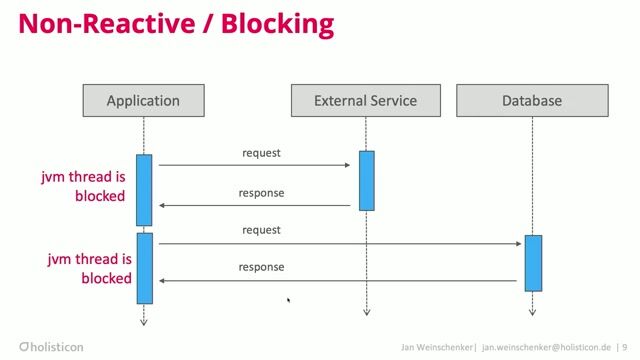
Visualizing blocking vs non-blocking request models
Sequence diagrams illustrate how non-blocking, fire-and-forget requests improve resource utilization compared to traditional blocking calls.
#3about 3 minutes
An analogy for reactive task distribution
A story about cleaning rooms illustrates how reactive programming breaks large workloads into small, independent tasks for efficient parallel execution.
#4about 2 minutes
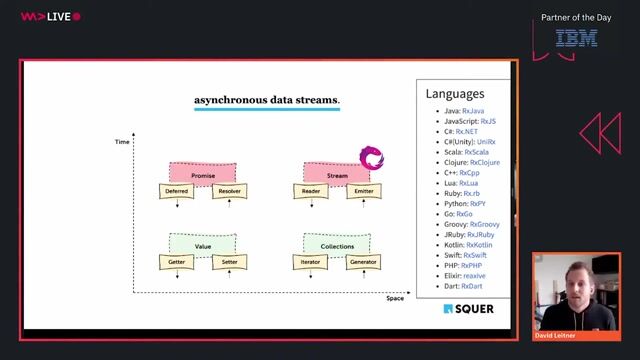
Exploring reactive Java frameworks and adoption challenges
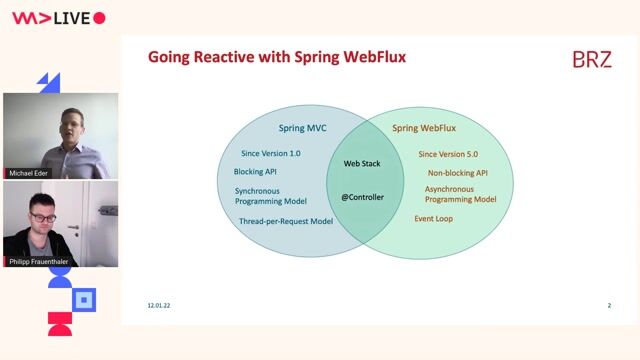
Despite numerous frameworks like WebFlux and RxJava, reactive programming faces a steep learning curve and debugging complexities.
#5about 3 minutes
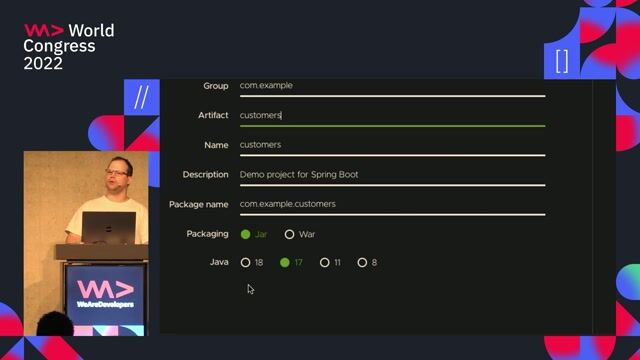
Live code demonstration of imperative Java
A walkthrough of a standard, non-reactive Java method shows a straightforward, blocking approach to fetching and processing API data.
#6about 3 minutes
Live code demonstration of reactive Java
The same API data fetching task is implemented using a reactive, stream-based approach with Spring WebFlux and Project Reactor's Flux.
#7about 3 minutes
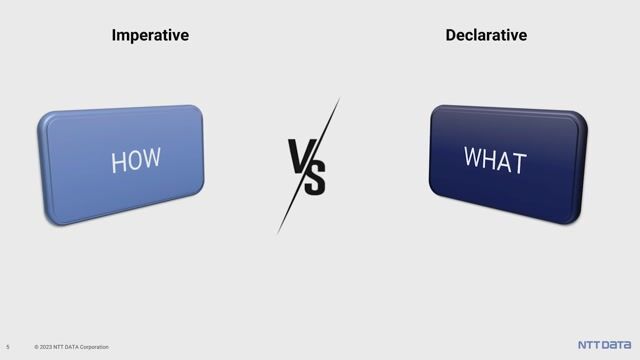
Understanding the unique reactive debugging experience
Debugging reactive code reveals its declarative nature, where execution is non-linear and only begins after a subscription is made.
#8about 3 minutes
Q&A on Project Loom and integration challenges
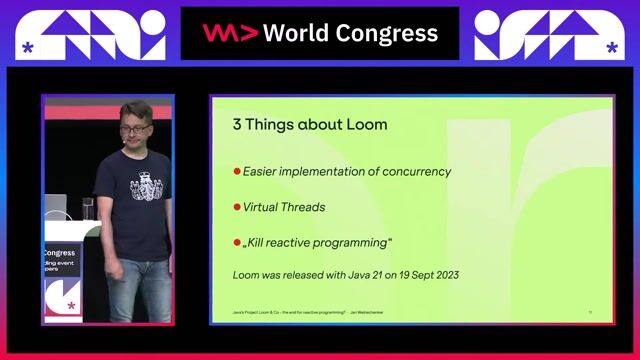
The discussion covers whether Project Loom makes reactive programming obsolete and how to handle integration with non-reactive components like JDBC.
Related jobs
Jobs that call for the skills explored in this talk.
Matching moments
01:19 MIN
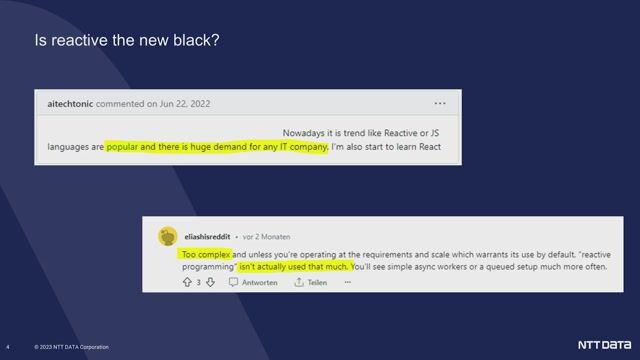
Examining the trend and debate around reactive programming
Is reactive the new black? Imperative vs. reactive programming with Quarkus
01:12 MIN
Comparing Project Loom with reactive programming
Kubernetes Native Java
02:47 MIN
The core principles of reactive programming
Java's Project Loom & Co - the end for reactive programming?
02:51 MIN
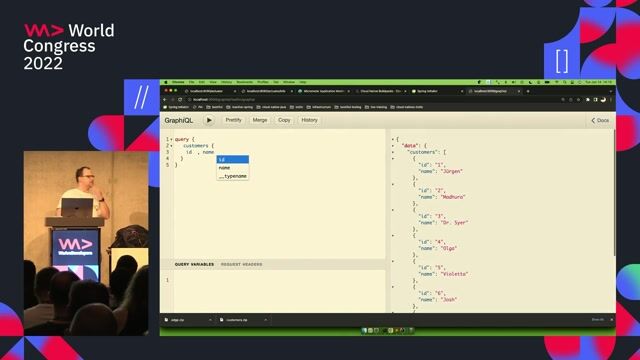
Building a reactive service with Spring Data
Kubernetes Native Java
04:11 MIN
Comparing reactive and imperative code performance
Development of reactive applications with Quarkus
08:27 MIN
Exploring the core principles of reactive programming
Rethinking Reactive Architectures with GraphQL
01:53 MIN
Contrasting imperative, declarative, and reactive code styles
Is reactive the new black? Imperative vs. reactive programming with Quarkus
09:05 MIN
Q&A on virtual threads, reactive programming, and Java 21
Introduction and pitfalls of Java's new concurrency model
Using Java 17 latest features in real world projectsWelcome to this issue of the WeAreDevelopers Live Talk series. This article recaps an interesting talk by Ron Veen who introduced the audience to some of the most interesting features that got added to the Java language.About the speaker:Ron is a hig...
Thomas Limbüchler
Top in-demand programming languages to learn in 2021Long-established programming languages such as Java, C, or JavaScript are usually the right choice for beginners. But are they still future-proof? These are the players of tomorrow that you should learn in 2021.New programming languages are becoming ...
Benedikt Bischof
Java BasicsIn 1991,James Gosling invented a high-level, general-purpose, object-oriented andsecure programming language and called it OAK (after a tree in front of hiswindow). And four years later, in 1995, it was renamed after one of the GreaterSunda Islands: ...
From learning to earning
Jobs that call for the skills explored in this talk.




.gif?w=240&auto=compress,format)

.gif?w=240&auto=compress,format)