Ditch the virtual DOM. Lit delivers high-performance updates by using native browser features to build fast, lightweight web components that work everywhere.
#1about 4 minutes
Understanding the core principles of web components
Web components provide a standard way to create encapsulated, reusable UI elements using custom elements, HTML templates, and the shadow DOM.
#2about 6 minutes
Why template literals are a game changer for DOM manipulation
Template literals offer a secure and efficient alternative to traditional DOM manipulation by separating static strings from dynamic values at a native browser level.
#3about 5 minutes
Building your first reactive component with Lit
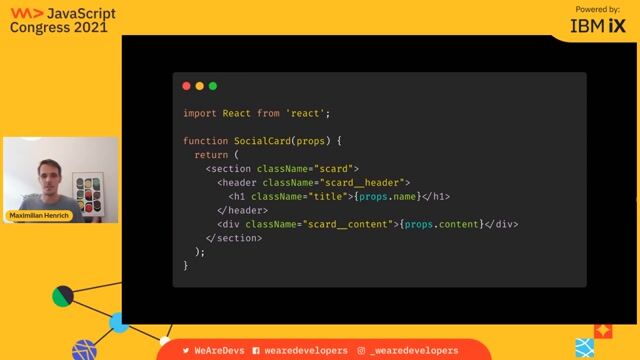
A step-by-step guide to creating a basic Lit component using decorators for properties and custom elements, highlighting its efficient, virtual DOM-free rendering.
#4about 5 minutes
Managing state, composition, and styling in Lit
Learn to build more complex UIs by composing components, managing internal state with the @state decorator, and applying encapsulated styles using CSS literals.
#5about 5 minutes
Exploring experimental features with Lit Labs
An overview of the Lit Labs ecosystem, which provides experimental packages for tasks like server-side rendering, animations, routing, and React integration.
#6about 3 minutes
Building high-performance lists with the virtualizer lab
The virtualizer lab enables rendering of massive lists with high performance by only rendering the items currently visible in the viewport.
#7about 3 minutes
Q&A on Lit's practical applications and architecture
Discussion covers how Lit handles CSS, its default use of the shadow DOM, and its suitability for separating UI from complex business logic in large applications.
Related jobs
Jobs that call for the skills explored in this talk.
Matching moments
06:45 MIN
Building with Web Components and the Lit library
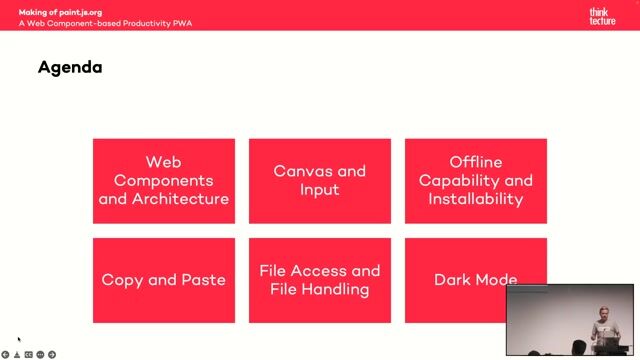
Making of paint.js.org—a Web Component-based Productivity PWA
00:45 MIN
Simplifying development with Lit and Stencil
Extending HTML with Web Components
04:43 MIN
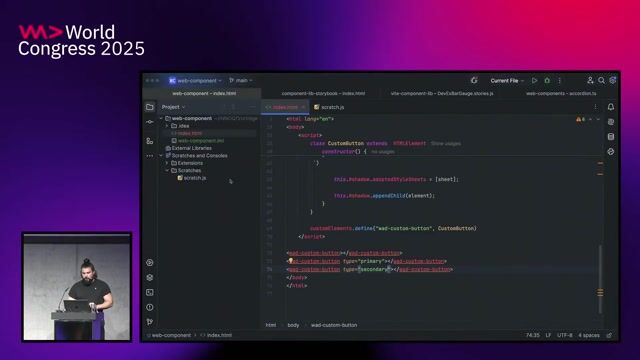
Setting up a modern component library with Vite and Lit
Building a framework-independent component library
03:17 MIN
Understanding the role and value of web components
Keith Cirkle of GitHub on React Fatigue
02:32 MIN
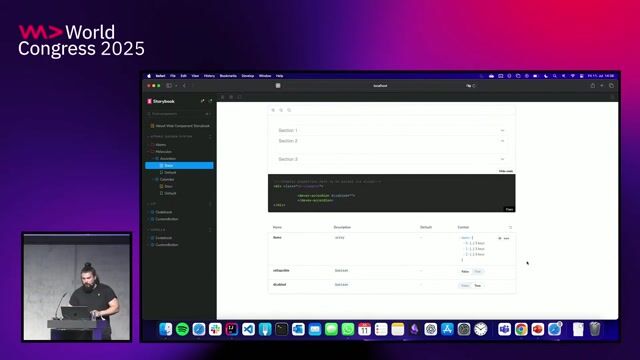
Exploring the IBM Carbon Design System as an example
Building a framework-independent component library
07:10 MIN
Understanding web components and their core technologies
Accessibility with Web Components
03:33 MIN
Creating modern code islands with web components
Defeat that legacy monster! Guerilla refactoring with web standards
01:12 MIN
Introducing the three core parts of web components
Micro Components - a different approach to a simpler component-based webThere has been a lot of heated discussion lately in the web community about component based development. One side argued that Web Components are a standard we should follow whereas others complained that they still lag behind in what frameworks offer...
Daniel Cranney
The State of HTML 2024: What can we learn from it?The results of the State of HTML 2024 survey are in! Though the name suggests it’s HTML-only, the survey focuses on the web platform in a more general sense, giving us some fascinating insights into not only the state of the web, but also some sense ...
Luis Minvielle
The Best Upcoming IT WebinarsNow that you already know what IT webinars are and how they can help you level up your professional appeal, you might want actually to get into one. Live tech webinars are one of the best ways to stay on top of the latest trends and tools because eit...
Luis Minvielle
The Best 7 Frontend Frameworks for Developers in 2025Which frontend frameworks should developers focus on in 2025? We’re listing them for you and showing advantages and drawbacks. You’ll notice we included some libraries as well, because you can’t miss those in 2025.What is the best front end framework...
From learning to earning
Jobs that call for the skills explored in this talk.







.webp?w=240&auto=compress,format)