At The Helm of Kubernetes: Repeatable Infrastructure Creation for Mere Mortals
Stop copying and pasting Kubernetes YAML. Learn how Helm turns complex deployments into simple, repeatable charts, making infrastructure management easy for mere mortals.
#1about 1 minute
Understanding Helm as a package manager for Kubernetes
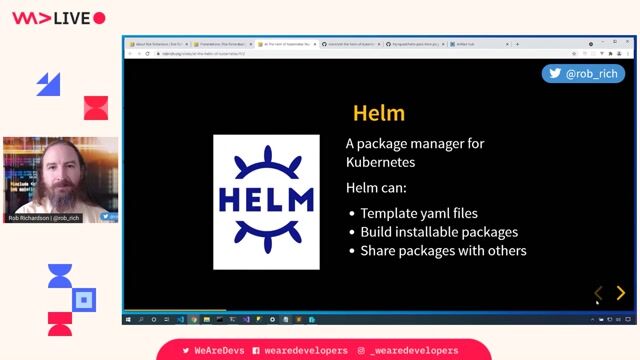
Helm acts as a package manager for Kubernetes, templating the YAML configuration that surrounds your containers, which is a different role than Docker.
#2about 4 minutes
Creating a basic Helm chart from scratch
Build a new Helm chart by creating a `values.yaml` file to extract and centralize configuration variables from existing Kubernetes manifests.
#3about 2 minutes
Defining chart metadata using the Chart.yaml file
The `Chart.yaml` file provides essential metadata for your package, including API version, name, description, and separate versions for the chart and the application.
#4about 6 minutes
Templating Kubernetes resources with Go templates
Replace hardcoded values in your Kubernetes YAML files with dynamic Go template expressions that reference variables from `values.yaml` and `Chart.yaml`.
#5about 7 minutes
Validating and rendering charts with the Helm CLI
Use `helm lint` to check for syntax errors and `helm template` to render the final Kubernetes YAML, overriding default values with the `--set` flag for dynamic configurations.
#6about 3 minutes
Packaging charts for distribution and reuse
Use `helm package` to create a versioned tarball of your chart, and leverage the `helm-pack` plugin to inject values during the packaging process.
#7about 4 minutes
Installing and managing application releases with Helm
Manage the lifecycle of a deployed application using `helm install` to create a release, `helm status` to check it, and `helm upgrade` to apply new versions.
#8about 5 minutes
Enabling multiple instances with release names
Modify templates to incorporate the `Release.Name` variable, which ensures resource names are unique and allows multiple instances of the same chart to coexist in a cluster.
#9about 2 minutes
Sharing and consuming public Helm charts
Discover and install third-party applications from public repositories like Artifact Hub by adding the repository and using `helm install`.
#10about 4 minutes
Understanding Helm's limitations and its alternatives
Helm excels at packaging and deployment but lacks runtime operational capabilities, for which more advanced tools like Kubernetes Operators are better suited.
#11about 7 minutes
Q&A: Helm's value, migration, and operator comparison
Helm's complexity is justified for managing many variables, migration from v2 to v3 involves removing Tiller, and it serves as a pragmatic alternative to building full Kubernetes Operators.
Related jobs
Jobs that call for the skills explored in this talk.
Matching moments
11:35 MIN
Q&A on Helm, K3s, Minikube, and WSL2
Local Development Techniques with Kubernetes
05:04 MIN
A simple pattern for Kubernetes adoption without complex tools
Retooling and refactoring - an investment in people.
04:16 MIN
Enabling developer autonomy with GitOps and CRDs
Software Engineering Social Connection: Yubo’s lean approach to scaling an 80M-user infrastructure
01:21 MIN
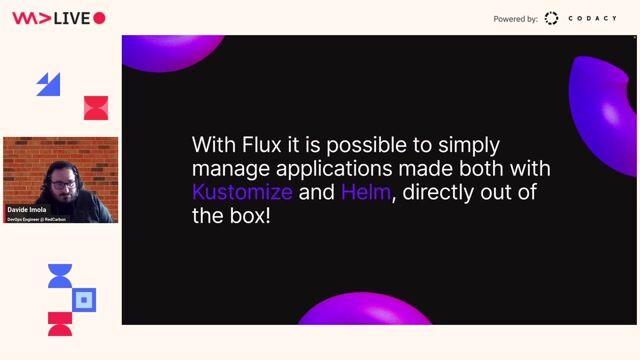
Using Helm and Kustomize for application management
How to GitOps your cluster with Flux
08:02 MIN
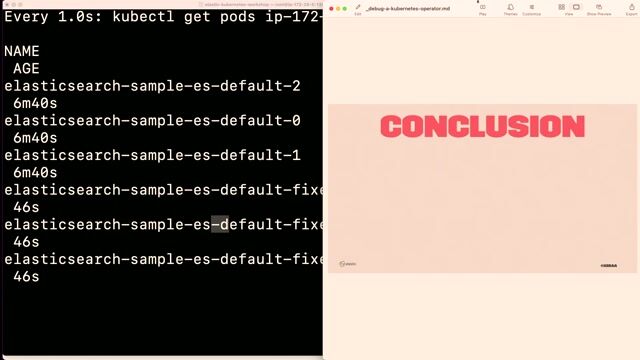
Customizing operators and comparing them to Helm charts
Debug a Kubernetes Operator
03:57 MIN
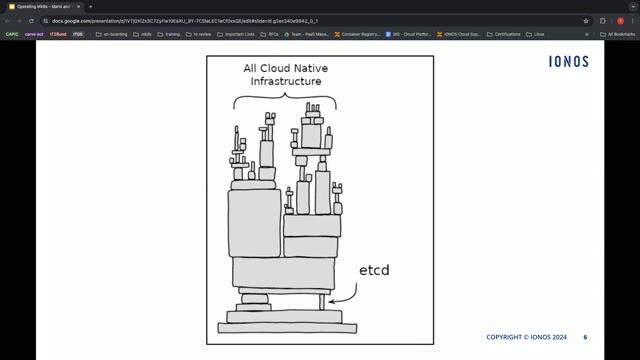
Evolving etcd deployment strategies over time
Operating etcd for Managed Kubernetes
07:23 MIN
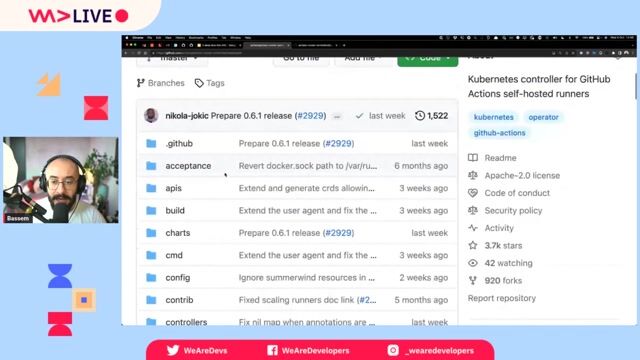
Packaging and publishing ARC with Helm and OCI images
A deep dive into ARC the Kubernetes operator to scale self-hosted runners
01:52 MIN
Q&A: Choosing between Helm and Kustomize for applications
Learning Kubernetes made easy with KubeCampusLearning to use Kubernetes? KubeCampus by Kasten offers free educational content for all skill levels to get you started!Kubernetes is an open-source system for deploying, scaling and managing containerized applications. It allows you to deploy your ...
Chris Heilmann
WeAreDevelopers LIVE days are changing - get ready to take partStarting with this week's Web Dev Day edition of WeAreDevelopers LIVE Days, we changed the the way we run these online conferences. The main differences are:Shorter talks (half an hour tops)More interaction in Q&AA tips and tricks "Did you know" sect...
GitHub Copilot: Beyond the Basics – 10 Ways to Elevate Your CodingWelcome to an in-depth exploration of GitHub Copilot and its capabilities. If you're a software developer or someone intrigued by AI's potential to revolutionize coding, this post is for you. GitHub Copilot, an AI-powered code completion tool, offers...
From learning to earning
Jobs that call for the skills explored in this talk.