Ankit Patel, Matt White, Philipp Schmid, Lucie-Aimée Kaffee & Andreas Blattmann
Open Source AI, To Foundation Models and Beyond
Is open source AI actually safer than closed models? Experts argue that community-driven transparency is the key to identifying and mitigating risks more effectively.
#1about 3 minutes
Defining the different categories of open source AI
The Linux Foundation's framework categorizes open source AI into open science, open tooling, and open models based on completeness and licensing.
#2about 4 minutes
Balancing open source principles with business sustainability
Companies navigate different licensing strategies, like permissive Apache 2.0 versus non-commercial licenses, to sustain development while contributing to the community.
#3about 2 minutes
Why policy should incentivize open sharing in AI
Effective policy should encourage the open sharing of models and data to improve efficiency and safety, rather than accidentally penalizing transparency.
#4about 3 minutes
How open source models accelerate AI innovation
Open models foster rapid innovation and competition, enabling the community to build upon existing work and create a powerful feedback loop for developers.
#5about 7 minutes
Moving beyond leaderboards in AI model evaluation
Relying solely on public benchmarks is flawed due to contamination, so developers should use a mix of public, private, and personalized evaluation sets for specific use cases.
#6about 2 minutes
Incorporating humanities and culture into AI benchmarks
Creating more robust and less biased AI requires collaborating with experts in fields like philosophy to develop benchmarks that reflect diverse cultural values.
#7about 6 minutes
Debunking common myths about open source AI
Common misconceptions are addressed, clarifying that openness enhances safety, AI has academic open roots, and true progress requires more than just open weights.
Related jobs
Jobs that call for the skills explored in this talk.
Matching moments
06:11 MIN
Open source models ensure a competitive AI ecosystem
Decoding Trends: Strategies for Success in the Evolving Digital Domain
06:45 MIN
The future of open source licensing and incentives
Open Source: The Engine of Innovation in the Digital Age
04:04 MIN
Navigating AI regulation and open source
The AI Hype Filter: What’s Real, What’s Investable, What’s Noise?
03:36 MIN
Navigating the challenges of defining open source AI
The Open Future of AI: Beyond Open Weights
03:19 MIN
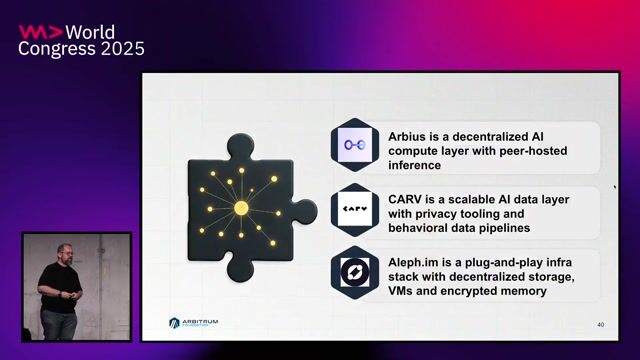
Exploring open source and decentralized AI alternatives
How to Decipher User Uncertainty with GenAI and Vector Search
03:46 MIN
The impact of open source models like DeepSeek
Graphs and RAGs Everywhere... But What Are They? - Andreas Kollegger - Neo4j
00:59 MIN
Conclusion and the future of open source AI
Self-Hosted LLMs: From Zero to Inference
01:11 MIN
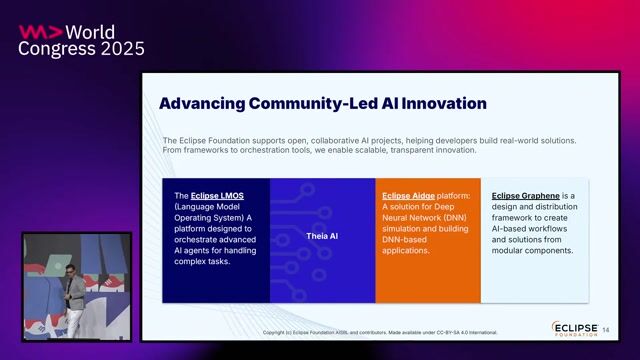
Advancing AI with specialized open source projects
Harnessing the Power of Open Source's Newest Technologies
Panel Discussion: Responsible AI in Practice - Real-World Examples and ChallengesIntroductionIn the ever-evolving landscape of artificial intelligence, the concept of "responsible AI" has emerged as a cornerstone for ethical and practical AI implementation. During the WWC24 Panel discussion, three eminent experts—Mina, Bjorn Brin...
Chris Heilmann
Exploring AI: Opportunities and Risks for DevelopersIn today's rapidly evolving tech landscape, the integration of Artificial Intelligence (AI) in development presents both exciting opportunities and notable risks. This dynamic was the focus of a recent panel discussion featuring industry experts Kent...
Stephan Gillich - Bringing AI EverywhereIn the ever-evolving world of technology, AI continues to be the frontier for innovation and transformation. Stephan Gillich, from the AI Center of Excellence at Intel, dove into the subject in a recent session titled "Bringing AI Everywhere," sheddi...
From learning to earning
Jobs that call for the skills explored in this talk.