Unlike brittle languages, HTML was designed to be forgiving. This core principle is why the very first website still renders perfectly today.
#1about 2 minutes
Why HTML is inherently more resilient than JavaScript
HTML was designed to be forgiving of errors to make web development accessible, unlike JavaScript where a single typo can break everything.
#2about 2 minutes
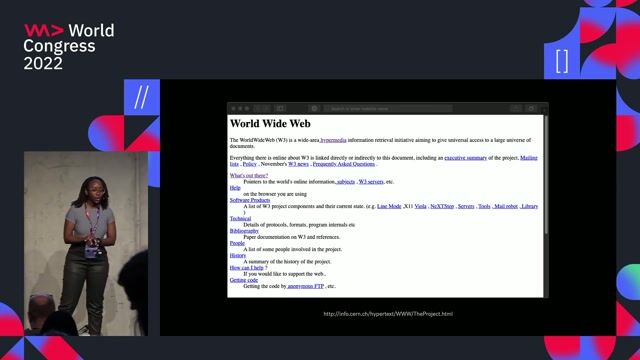
The origin of the web and its founding principles
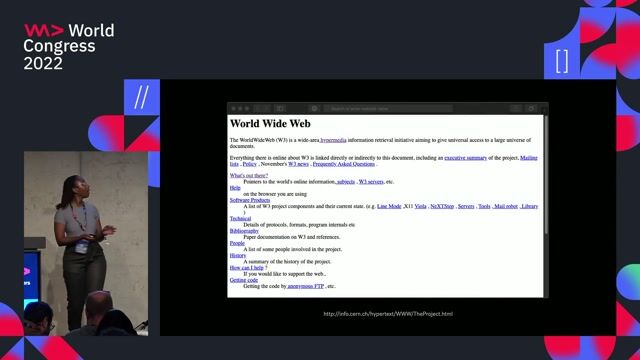
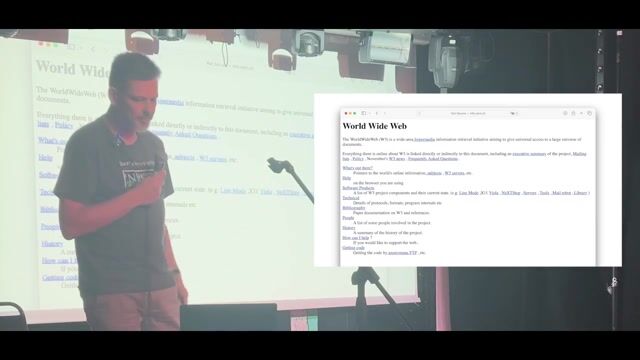
Tim Berners-Lee created the World Wide Web at CERN to make information sharing easier, with resilience built into its core design from the very beginning.
#3about 3 minutes
How browsers achieve forward and backward compatibility
Browsers ensure forward and backward compatibility by ignoring unknown HTML tags and rendering them as generic DOM elements, which is the same principle that makes the `noscript` tag work.
#4about 2 minutes
Using CSS and JavaScript to revive deprecated tags
You can recreate the functionality of deprecated tags like `<blink>` using CSS animations, demonstrating the flexibility of modern web standards.
#5about 3 minutes
How the HTML tokenizer parses tags and attributes
The HTML tokenizer processes source code character-by-character into tokens and is designed to be extremely forgiving of errors, which enables the custom syntax used by modern frameworks.
#6about 3 minutes
Exploring the surprising flexibility of HTML syntax
The HTML specification allows for surprisingly flexible tag and attribute names, including special characters and even emojis, as long as the basic rules are followed.
#7about 1 minute
Why semantic HTML still matters for functionality
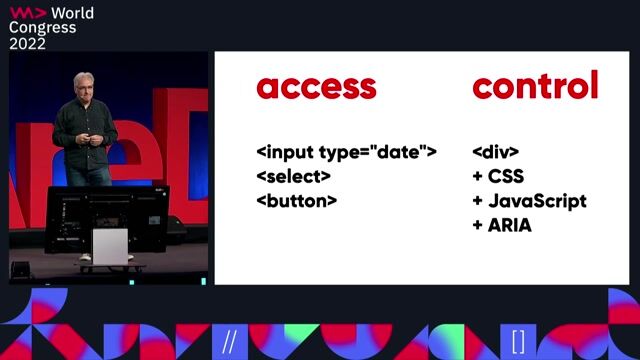
Despite HTML's flexibility with custom tags, using semantic elements like `<button>` is crucial for accessibility and built-in browser functionality.
#8about 6 minutes
How the DOM tree builder automatically corrects errors
The DOM tree builder automatically fixes common mistakes by adding missing required elements and intelligently re-nesting tags to create a valid document structure.
#9about 3 minutes
Reclaiming the web by creating personal websites
The web was meant for everyone to create and share content, so we should resist the dominance of commercial platforms by building our own personal websites.
#10about 2 minutes
Understanding the specific behavior of the `noscript` tag
The browser's parsing rules dictate that nested `noscript` tags are treated as plain text and that its content rendering cannot be overridden with CSS.
Related jobs
Jobs that call for the skills explored in this talk.
Matching moments
01:52 MIN
Understanding the inherent resilience of HTML
The Resilience of the World Wide Web
04:00 MIN
The web's foundational principle of backward compatibility
Future-Proof CSS
02:14 MIN
The creation of the web by Tim Berners-Lee
The Resilience of the World Wide Web
03:35 MIN
The personal history and context behind the web's creation
Opening Keynote by Sir Tim Berners-Lee
09:10 MIN
Returning to foundational web technologies like RSS and HTML
Using all the HTML, Running State of the Browser and "Modern" is Rubbish
02:13 MIN
Why the web values ubiquity over consistency
Design Principles For The Web
03:43 MIN
Remembering solved challenges in web development history
The year 3000, a brief history of Web Development
02:43 MIN
How browsers achieve forward and backward compatibility
Sir Tim Berners-Lee – the genius behind the World Wide WebWe are sure Sir Tim Berners-Lee does not need a lot of introduction. The man behind the World Wide Web and HTML is well-known not only in developer circles but amongst general masses as well. However, to show appreciation and joy for having Sir Tim a...
Daniel Cranney
The State of HTML 2024: What can we learn from it?The results of the State of HTML 2024 survey are in! Though the name suggests it’s HTML-only, the survey focuses on the web platform in a more general sense, giving us some fascinating insights into not only the state of the web, but also some sense ...
Chris Heilmann
Dev Digest 116 - WWWAI?This time, learn how to un-AI Google's search results, what's new on the web, avoid a new security hole and go back to BASICS with us. News and ArticlesWhat a week. Google, Microsoft, OpenAI and many others had their big flagship events announcing th...
Chris Heilmann
Micro Components - a different approach to a simpler component-based webThere has been a lot of heated discussion lately in the web community about component based development. One side argued that Web Components are a standard we should follow whereas others complained that they still lag behind in what frameworks offer...
From learning to earning
Jobs that call for the skills explored in this talk.