Autonomous microservices with event-driven architecture
Is your microservice architecture just a fragile, distributed monolith? Discover how event-driven patterns create truly autonomous and resilient systems.
#1about 2 minutes
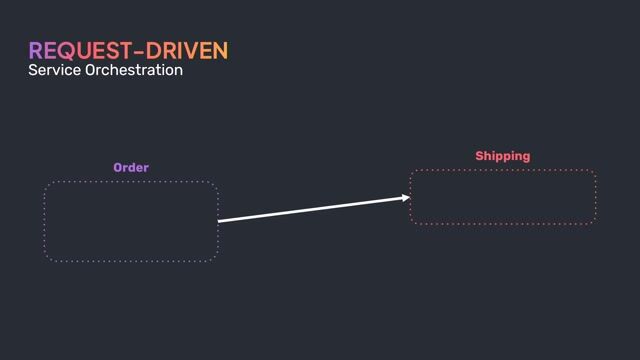
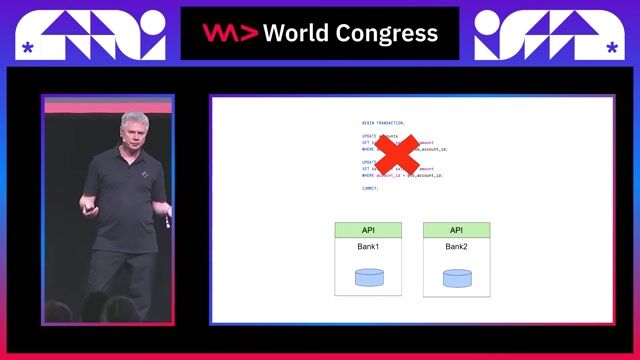
Understanding request-driven architecture and service orchestration
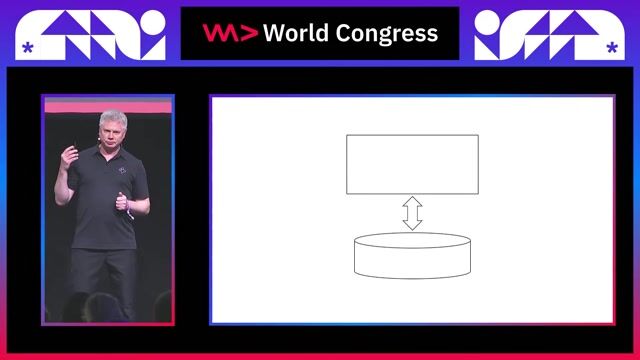
Request-driven architecture uses synchronous communication where an orchestrator service manages the flow between other services.
#2about 2 minutes
Decoupling services with an event broker
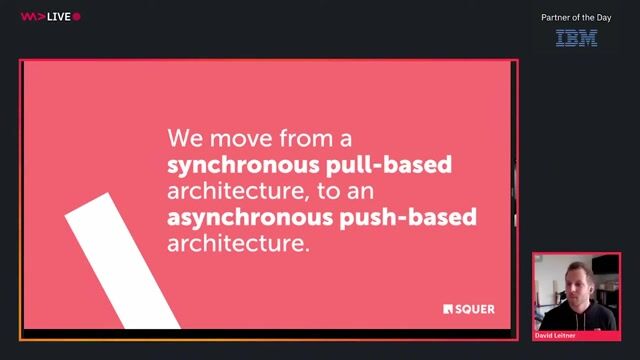
Event-driven architecture uses an event broker to decouple services, allowing them to communicate asynchronously through events.
#3about 3 minutes
Weighing the pros and cons of event-driven systems
Event-driven systems offer resilience and plug-and-play functionality but introduce challenges like unclear process flows and complex debugging.
#4about 3 minutes
Using the event notification pattern for consistency
The event notification pattern sends a minimal event with just an ID, requiring consumers to make a callback for more data, which favors consistency over availability.
#5about 3 minutes
Achieving autonomy with event-carried state transfer
The event-carried state transfer pattern includes all necessary data within the event itself, eliminating callbacks and promoting service autonomy and availability.
#6about 4 minutes
Storing event history with an event store
An event store captures the complete history of all events, enabling advanced analytics and answering questions that current-state databases cannot.
#7about 4 minutes
Rebuilding system state with event sourcing
Event sourcing uses the event store as the single source of truth, allowing systems to be rebuilt or migrated by replaying events from the beginning.
#8about 1 minute
Defining the core traits of autonomous microservices
An autonomous microservice is highly independent, prioritizes availability over consistency, and uses events for communication to achieve resilience.
#9about 1 minute
Prioritizing business requirements over technical trends
The primary goal is to deliver business value efficiently, which means choosing the simplest architecture that works, even if it's request-driven.
Related jobs
Jobs that call for the skills explored in this talk.
Matching moments
02:20 MIN
Why event-driven architecture is key for agents
Event-Driven Architecture: Breaking Conversational Barriers with Distributed AI Agents
05:57 MIN
Using events to decouple services in architecture
CQRS and Event Sourcing without the pixie dust
06:43 MIN
Building an event-based microservice architecture for agility
The user in the eye of the Cargo1492 storm
05:40 MIN
Evolving from classic microservices to event-driven design
Kafka Streams Microservices
03:10 MIN
The hidden costs and challenges of event-driven architectures
Durable Execution: A Revolutionary Abstraction for Building Resilient Applications
07:20 MIN
Tracing the evolution of microservices toward reactivity
Rethinking Reactive Architectures with GraphQL
02:47 MIN
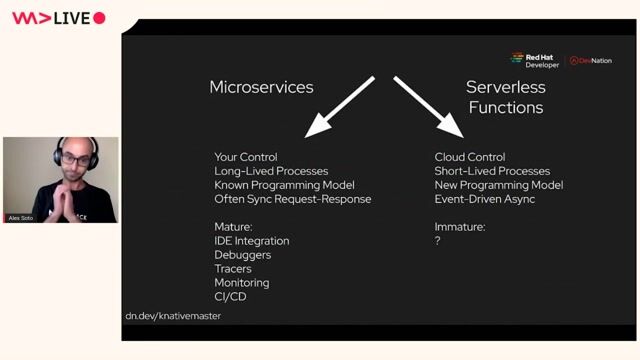
Choosing between microservices and serverless architectures
Why You Shouldn’t Build a Microservice ArchitectureWelcome to this issue of the WeAreDevelopers Live Talk series. This article recaps an interesting talk by Michael Eisenbart who talks about the pros and cons of microservice architecture.About the speaker:Michael has been working for Bosch as a sof...
Chris Heilmann
Micro Components - a different approach to a simpler component-based webThere has been a lot of heated discussion lately in the web community about component based development. One side argued that Web Components are a standard we should follow whereas others complained that they still lag behind in what frameworks offer...
Panel Discussion: Responsible AI in Practice - Real-World Examples and ChallengesIntroductionIn the ever-evolving landscape of artificial intelligence, the concept of "responsible AI" has emerged as a cornerstone for ethical and practical AI implementation. During the WWC24 Panel discussion, three eminent experts—Mina, Bjorn Brin...
From learning to earning
Jobs that call for the skills explored in this talk.




.gif?w=240&auto=compress,format)